
Why this project?#
Using an OSx (or Linux) environment, when you need to manage a lot of servers it can be difficult to remember all the hostnames or IP addresses. On the Windows system, I used to use mRemote, but I didn’t find anything similar on OSx/Linux. That’s how I got the idea to create a simple CLI program allowing us to store all the connection information using tags (like mRemote does).
How to install the project#
It’s a NodeJS project and actually it is not available on the npm repository. So, the best way is downloading sources from GitHub and install globally from sources:
git clone https://github.com/mmornati/ssh2-keeper.git cd ssh2-keeper npm install -g .
The ssh2-keeper is now available as sk command on your system.
Configuration#
After the global installation, the configuration folder is into the global node modules installation folder. You can check which one is on your system using:

On my system, for example, the global folder is /usr/local/lib/node_modules which means, after the ssh2-keeper installation, the configuration folder will be /usr/local/lib/node_modules/ssh2-keeper/config.
Inside it, you will find a default.json file and you must configure the database folder.
{ "db_path": "/Users/mmornati/ssh2-keeper", "server_collection": "servers", "tag_collection": "tags", "default_username": "mmornati", "show_ssh_command": true }Usage#
If you globally installed the module, using sk --help you can retrieve the script documentation.
sk --help
Successfully connected to : ./db
USAGE: node sk [OPTION1] [OPTION2]... arg1 arg2...
The following options are supported:
-v, --verbose  Show verbose log
-t, --tag  Tag(s) to allow you to find server (multiple)
-h, --hostname  Hostname of your server
-a, --admin_server  If you need to connect to an Admin server to reach your target. Ex: ssh -tt [email protected] ssh -tt [email protected]
-i, --ip  Server IP address.
-u, --username  Username to connect to your server. If empty the one in configuration file be used
-o, --operation  One of ADD, SEARCH or DELETE
Add a new server#
sk -o add -h server35.mornati.net -i 192.168.100.35 -t jenkins -t slave -t slave04 -t integrationThis will add a server (if the hostname is not already present with the same hostname) with the provided parameters and tags.
With a line like the previous one we’ve seen, you can also update server parameters:
sk -o add -h server35.mornati.net -i 192.168.100.39In this way, for example, if the server was already present into the database, you will update the IP address. All other information already present into the database will be kept. In the same way, you can add a new tag to the server
sk -o add -h server35.mornati.net -t mypersonalserverwill add a new tag to the server (if not already present).

Search#
The most used function is the search one. You can search a server using the hostname, which will provide you the list of data known about the server:
sk -o search -h server20.mornati.net Successfully connected to : ./db { hostname: 'server20.mornati.net', ip: '192.168.100.20', tags: [ 'www', 'front', 'front02', 'preprod', 'france' ], _id: '15404e5a1b134cb289ffae0cc89968ca' } Added to clipboard
Or you can search using tags: it will return you the intersection between all provided tags.
sk -o search -t prod -t front -t italy Successfully connected to : ./db ssh [email protected] ssh [email protected]It will return you all the ‘front’ and ‘prod’ servers for ‘Italy’ (servers must have the 3 tags to be into the list). When the list gives you a single result, the ssh command will be directly in your clipboard: with a simple CTRL+V you can use it! :)
Search improved#
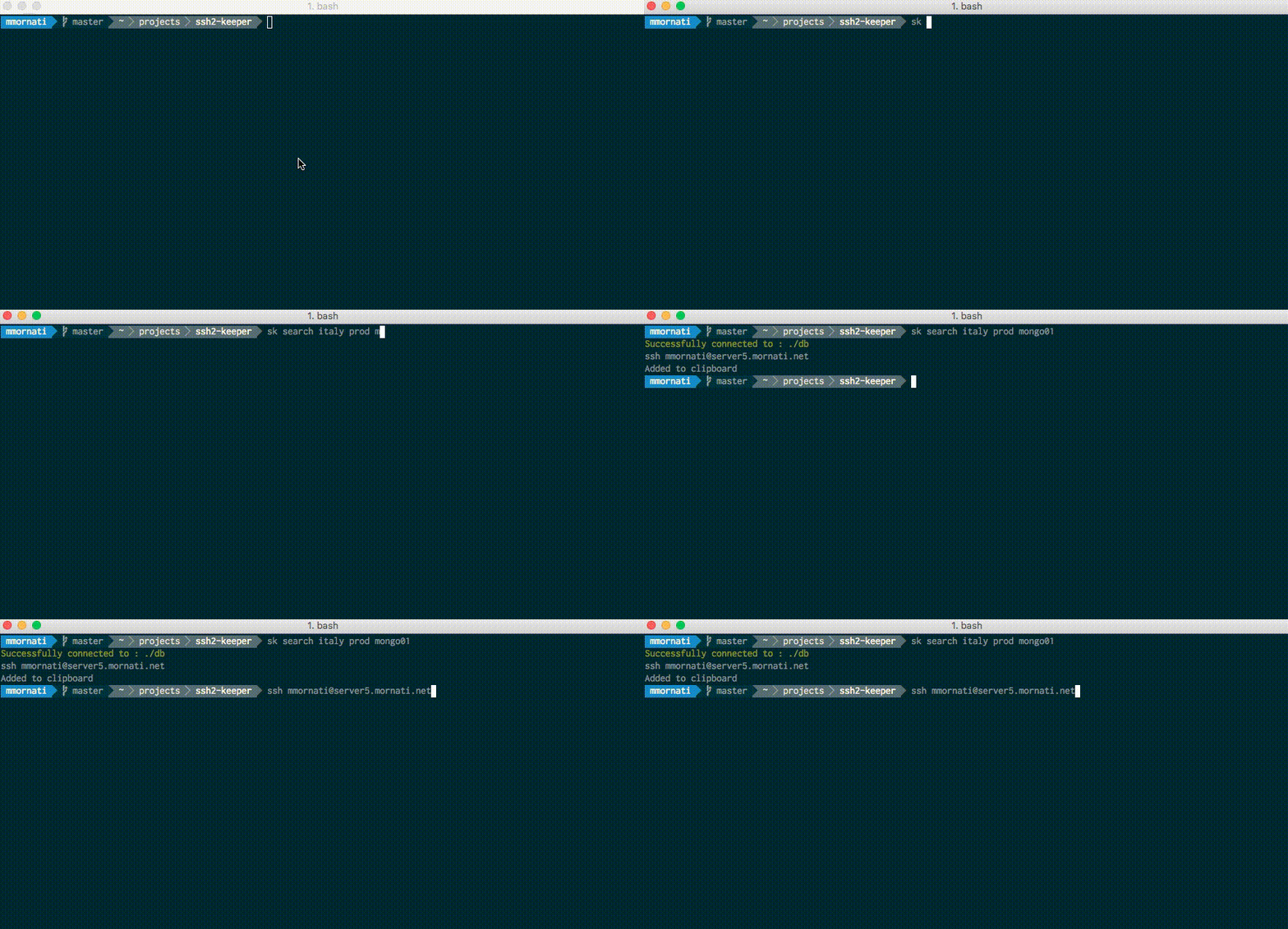
As I said before, this one is the most used function, I created an ‘undocumented’ function allowing you to search like this:
sk search prod front01 italy Successfully connected to : ./db ssh [email protected] Added to clipboardSo, without providing the option name. In this case:
- the first argument is the operation (SEARCH, ADD)
- if it is SEARCH from the second arguments all others will be considered as tags
- if it is ADD the second argument is the hostname and all others are tags

Tips#
To initialize my work environment database I used ‘spreadsheet’ (yes, it is amazing, but it was quick!).

I just copied hostnames and IPs I had on another document, and then, using the spreadsheet’s CONCATENATE function I was able to generate the list of ‘ADD’ commands.
Server with proxy#
If you are using an admin server between your PC and the target server (for example on the configuration environment) you can store this information into the database ( admin_server) and the ssh command sent by the ssh2-keeper will be ready to use.
sk search preprod france front02 Successfully connected to : ./db ssh -tt [email protected] ssh -tt [email protected] Added to clipboardNext Steps#
- Better management of Users (per server and tag)
- Add support to ssh_key per server and tags
- What you need to improve it :)
Originally published at blog.mornati.net on October 9, 2016.