Overview#
In the previous post I described how you can tune nginx to keep memory on your server. But, with any tune configuration, you can’t choose a value without retest later your server/app performances: having a larger configuration means you are using more resources than the real need; but using a smaller configuration means a poor user experience, like low response, error from the server, … If you have many Facebook friends and you can ask to all of them to get access to your blog at 8:00PM you’re executing a really good stress test: many requests from different places, with different ip addresses, … you have a real-life stress test. The problem is that you cannot measure the result. Try asking a Facebook friend how many milliseconds it took the homepage to load :D
Load Testing Tools#
I’m joking… but it was just to introduce a tool you can use to make a good stress test with a result measurements. The standard in open-source for this is Apache JMeter, which you can download and install on your machine to register and execute the test. But, in this way, you don’t have a really good test because server will always see a single user (same ip address) and can produce response using cached data. There’s also a free load test platform on the web, based on JMeter, you can use to make stress test to your wordpress: BlazeMeter. With the simple web interface you can setup your blog url, some pages/posts you want to visit, the number of concurrent users, the ramp-up period and the test duration. Then you just start your recorded test and you’ll get an email with the result link when the test finishes.
Test Results#
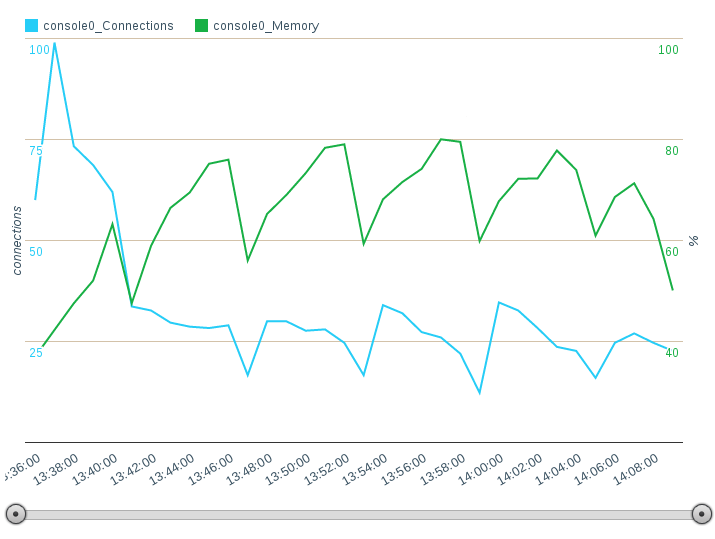
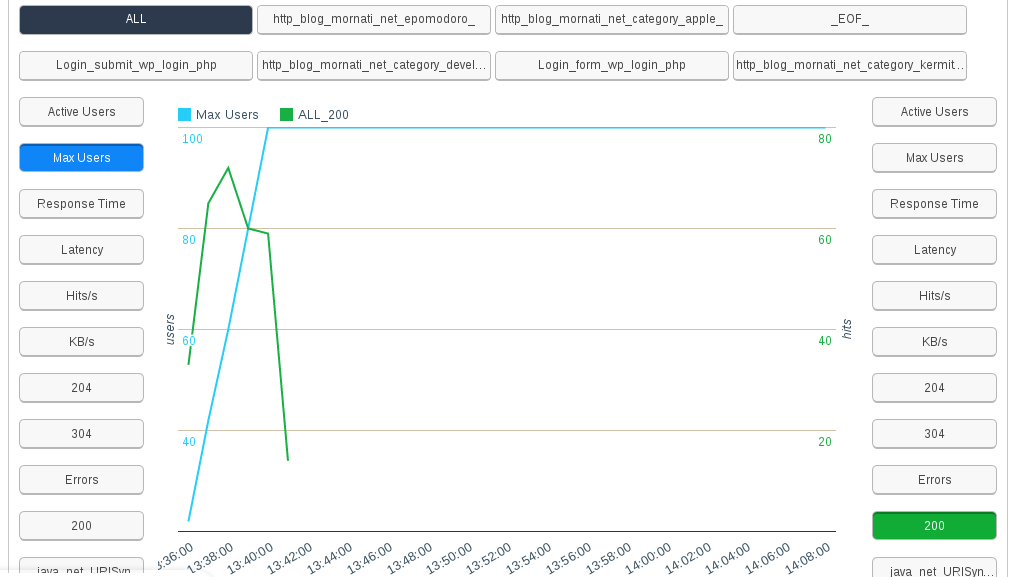
Here the results I got with the configuration I show you up in my previous post: